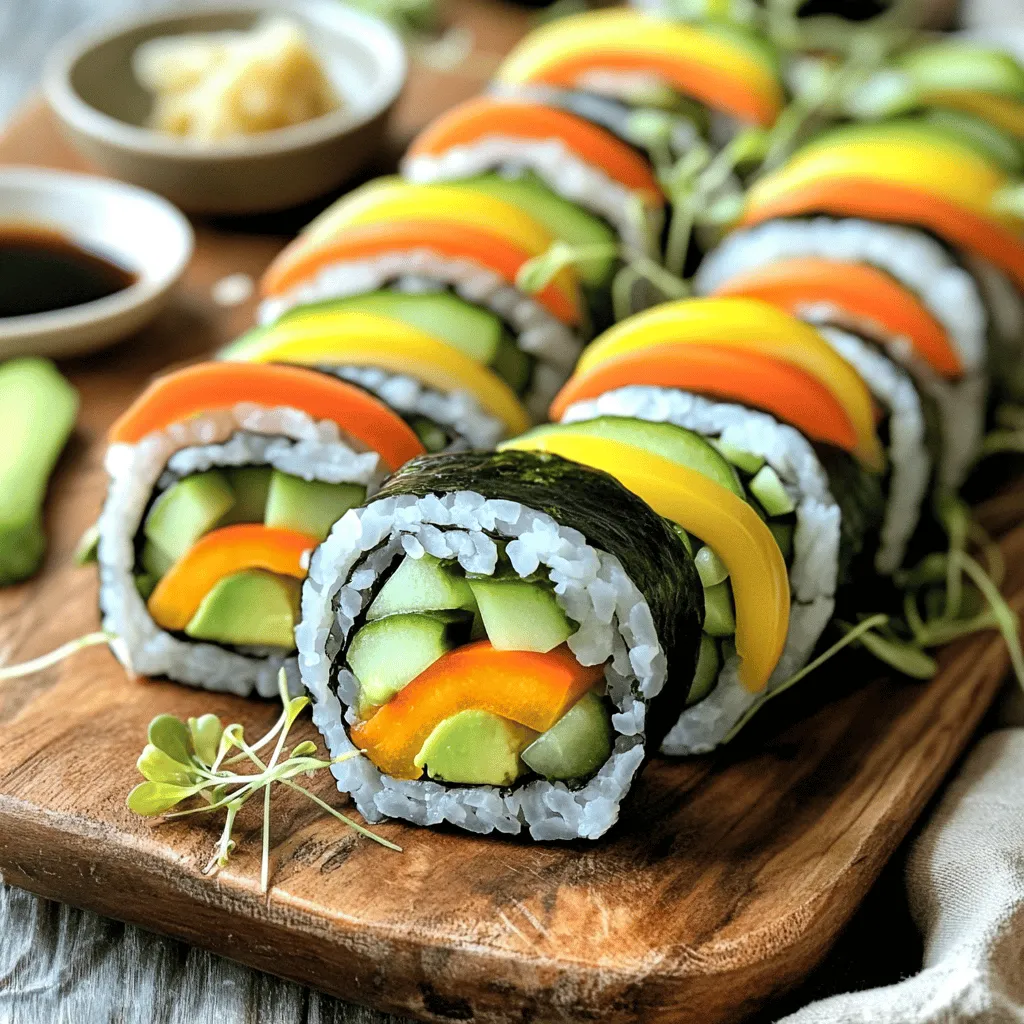
Dive into the colorful world of Rainbow Veggie Sushi Rolls! This dish is not only vibrant and fun, but it’s also packed with nutrients. I’ll guide you through easy steps to create tasty rolls that impress. You’ll learn about essential ingredients, rolling techniques, and storage tips. Let’s make a healthy, flavorful meal that everyone will love! Ready to roll? Let’s get started!
Ingredients
Essential Ingredients for Rainbow Veggie Sushi Rolls
To make your rainbow veggie sushi rolls, gather these key ingredients:
– 1 cup sushi rice
– 1 1/4 cups water
– 2 tablespoons rice vinegar
– 1 tablespoon sugar
– 1 teaspoon salt
– 4 sheets of nori (seaweed)
– 1/2 cucumber, julienned
– 1 small carrot, julienned
– 1/2 bell pepper (any color), sliced into thin strips
– 1 avocado, sliced
– 1/4 cup sprouts (such as alfalfa or radish)
These ingredients will give your sushi rolls a fresh and colorful look. Each veggie adds a unique taste and crunch. The sushi rice serves as a soft base that holds everything together.
Optional Ingredients for Serving
You can enhance your sushi experience by adding:
– Soy sauce, for dipping
– Pickled ginger (optional)
– Wasabi (optional)
These extras add bold flavors and a nice kick to your rolls. Try different amounts to find your perfect taste.
High-Quality Sushi Rice Tips
Using good sushi rice is vital. Here are some tips for perfect rice:
– Rinse the rice under cold water until the water runs clear.
– Use a rice cooker if possible for even cooking.
– Allow the rice to rest after cooking, covered, for about 10 minutes.
– Mix in the vinegar, sugar, and salt gently to avoid breaking the grains.
This method ensures your rice is sticky and flavorful. It helps the sushi hold its shape when you roll it.
Step-by-Step Instructions
Preparing the Sushi Rice
To start, rinse 1 cup of sushi rice under cold water. Keep rinsing until the water runs clear. This step removes excess starch. Next, place the rice in a medium pot with 1 1/4 cups of water. Bring it to a boil over medium heat. Once boiling, reduce the heat to low and cover the pot. Let it cook for about 15 minutes, until the water is absorbed. After cooking, remove the pot from the heat, keeping it covered. Allow the rice to rest for 10 minutes. This resting time is key for fluffy rice.
Seasoning the Rice
While the rice rests, mix 2 tablespoons of rice vinegar, 1 tablespoon of sugar, and 1 teaspoon of salt in a small bowl. Stir until the sugar and salt dissolve. Once the rice has rested, use a fork to fluff it up gently. Then, fold the vinegar mixture into the rice. It adds a nice tang and flavor. Let the seasoned rice cool to room temperature before you assemble the rolls.
Assembling the Sushi Rolls
To assemble, lay a bamboo sushi mat on a clean surface. Cover it with plastic wrap to keep it clean. Place a sheet of nori, shiny side down, on the mat. Wet your hands to keep the rice from sticking. Take a handful of sushi rice and spread it evenly over the nori, covering about 2/3 of the sheet. Leave a small space at the top. This will help seal the roll later.
Rolling and Cutting Techniques
Now it’s time to add the veggies. Place strips of cucumber, carrot, bell pepper, avocado, and a handful of sprouts horizontally on the rice-covered area. Begin rolling the sushi away from you, using the mat to guide it. Roll it tightly, but not too tight. You don’t want the filling to squeeze out. Once rolled, moisten the top edge of the nori with a bit of water. This will help seal the roll.
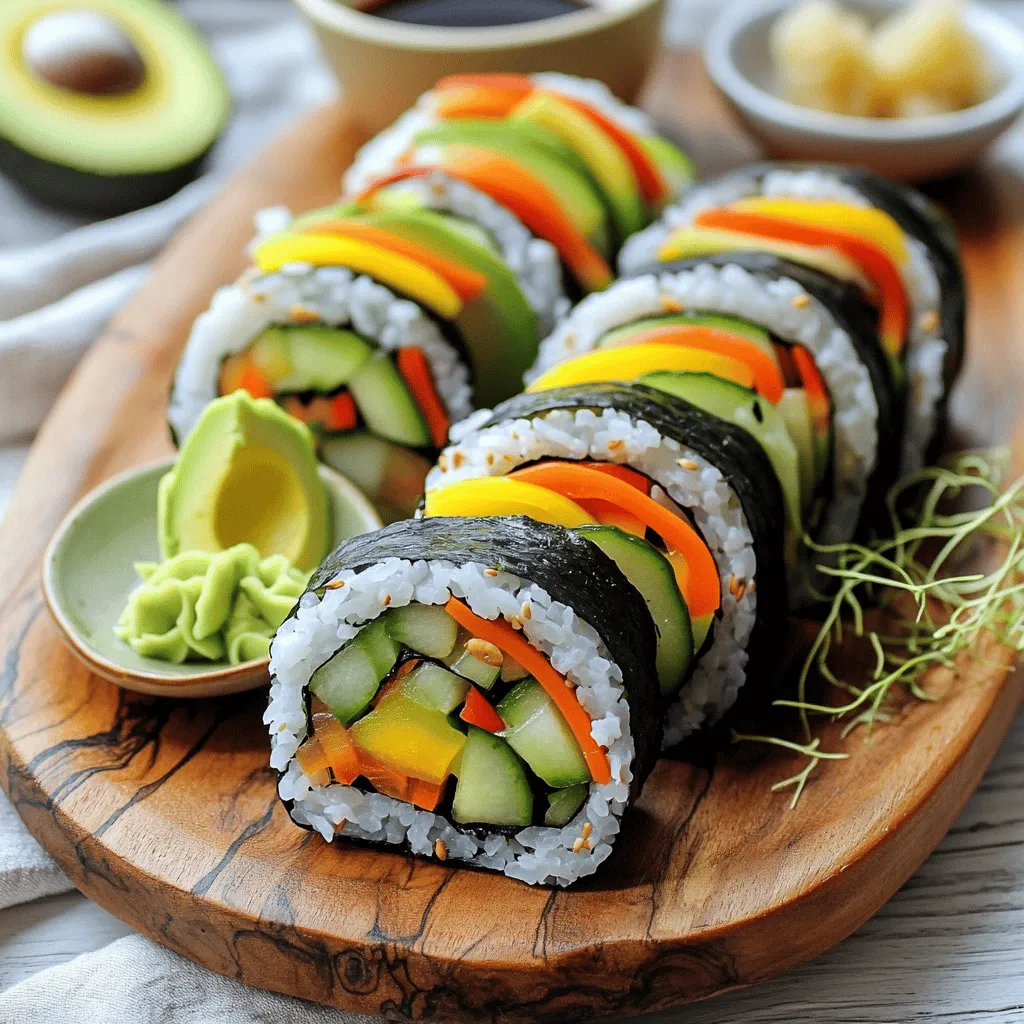
To cut, use a sharp, damp knife. Cut the roll into 6-8 pieces. Wipe the knife with a damp cloth between cuts for cleaner edges. Finally, arrange the sushi rolls on a plate. Serve them with soy sauce, pickled ginger, and wasabi if you like. Enjoy your beautiful and healthy rainbow veggie sushi!
Tips & Tricks
Best Practices for Rolling Sushi
Rolling sushi can be tricky, but it gets easier with practice. Use a bamboo mat for support. Place the nori on the mat, shiny side down. Wet your hands before handling rice to avoid stickiness. Spread sushi rice evenly, leaving space at the top. Add your veggies in a line across the rice. Tightly roll away from you, using the mat to shape it. Keep the roll firm but not too tight. This way, you keep all the fillings inside.
Keeping Nori Fresh Before Use
To keep nori fresh, store it in an airtight container. Avoid moisture, as it can make nori soggy. Use nori quickly after opening the package. If you notice it getting soft, try toasting it lightly. Just pass it over a flame for a few seconds. This brings back some crispness. Always keep the nori in a cool, dry place.
Enhancing Flavor with Dipping Sauces
Dipping sauces can elevate your sushi experience. Soy sauce is the classic choice. It adds a salty flavor that pairs well with veggies. You can mix soy sauce with wasabi for some heat. Another great option is a sesame sauce. This adds a nutty twist. For a refreshing touch, try a ponzu sauce. It is made with citrus juice and soy sauce. Don’t forget to serve pickled ginger on the side. It cleanses your palate between bites.
Variations
Adding Different Vegetables
You can make these sushi rolls unique by adding different vegetables. Try using radishes, zucchini, or sweet potatoes. Each veggie adds new colors and flavors. For example, add thin strips of purple cabbage for crunch and vibrant color. You can also include pickled vegetables for a tangy twist. The key is to slice the veggies thinly. This ensures they fit well in the roll and enhance the taste.
Incorporating Proteins (e.g., Tofu or Crab)
Adding protein can make your sushi rolls more filling. Tofu is a great choice for vegetarians. Simply slice it into thin strips and marinate it in soy sauce. This adds flavor and texture. If you enjoy seafood, crab meat works well too. You can use real crab or imitation crab. Both options blend nicely with the veggies. Just be sure to chop the protein into bite-sized pieces for easy rolling.
Using Different Types of Rice
While sushi rice is traditional, you can experiment with other types. Brown rice gives a nuttier flavor and adds fiber. Quinoa is another healthy choice. It’s packed with nutrients and has a unique taste. You can also try cauliflower rice for a low-carb option. Just make sure to season it well, as it has a milder flavor. This will keep your rolls tasty and satisfying.
Storage Info
How to Store Leftover Sushi Rolls
To keep your leftover sushi rolls fresh, wrap them tightly in plastic wrap. This keeps the nori from getting too soft. You can also place them in an airtight container. Avoid stacking the rolls to prevent them from squishing.
Best Way to Reheat or Eat Cold
I like to eat the sushi rolls cold. The fresh taste of the veggies shines that way. If you prefer warm sushi, use a microwave. Heat them for about 10-15 seconds. Be careful not to overheat, as this can make the rice dry.
Storage Duration Guidelines
Store your sushi rolls in the fridge for up to two days. After that, the nori may lose its crispness. If you see any signs of spoilage, like an off smell, throw them away. For best taste, enjoy them fresh from the kitchen.
FAQs
How to make vegan Rainbow Veggie Sushi Rolls?
To make vegan Rainbow Veggie Sushi Rolls, start by preparing sushi rice. Rinse 1 cup of sushi rice under cold water until the water runs clear. Cook it with 1 1/4 cups of water in a pot. Once cooked, season the rice with a mixture of rice vinegar, sugar, and salt. Next, place a sheet of nori on a bamboo mat. Spread the rice over two-thirds of the nori, leaving the top edge bare. Add strips of vegetables like cucumber, carrot, and bell pepper. Roll it up tightly and seal the edge with water. Cut the roll into pieces and serve.
Can I use brown rice instead of sushi rice?
Yes, you can use brown rice instead of sushi rice. Brown rice adds a nutty flavor and more fiber. However, it has a different texture. Cook it longer and add a bit more water. You may also need to adjust the seasoning to suit its flavor.
What is the best way to cut sushi rolls?
The best way to cut sushi rolls is with a sharp, wet knife. Wetting the knife prevents the rice from sticking. Cut the roll into 6 to 8 pieces with a gentle, downward motion. Wipe the knife between cuts to keep edges clean. This method keeps your rolls looking neat and pretty.
How long do sushi rolls stay fresh?
Sushi rolls stay fresh for about 24 hours if stored properly. Keep them in an airtight container in the fridge. The nori may soften, but the filling should remain fresh. For the best taste, enjoy them within the same day they are made.
What can I use as a substitute for nori?
If you need a substitute for nori, try soy paper or rice paper. Soy paper is thicker and adds a unique flavor. Rice paper works well too but requires dampening before use. You can also wrap sushi in lettuce leaves for a fresh twist.
Can I make Rainbow Veggie Sushi Rolls ahead of time?
Yes, you can make Rainbow Veggie Sushi Rolls ahead of time. Prepare them a few hours before serving. Store them in the fridge with a damp cloth over them to keep them moist. However, for the best taste, serve them fresh when you can.
Making rainbow veggie sushi rolls is fun and easy. You learned about key ingredients, sushi rice tips, and step-by-step prep. The right techniques help you roll, cut, and serve sushi perfectly. Plus, you can customize your rolls with different veggies or proteins. Storing your leftovers is simple too.
Now it’s time for you to try it. Enjoy the process, get creative, and share your tasty creations!